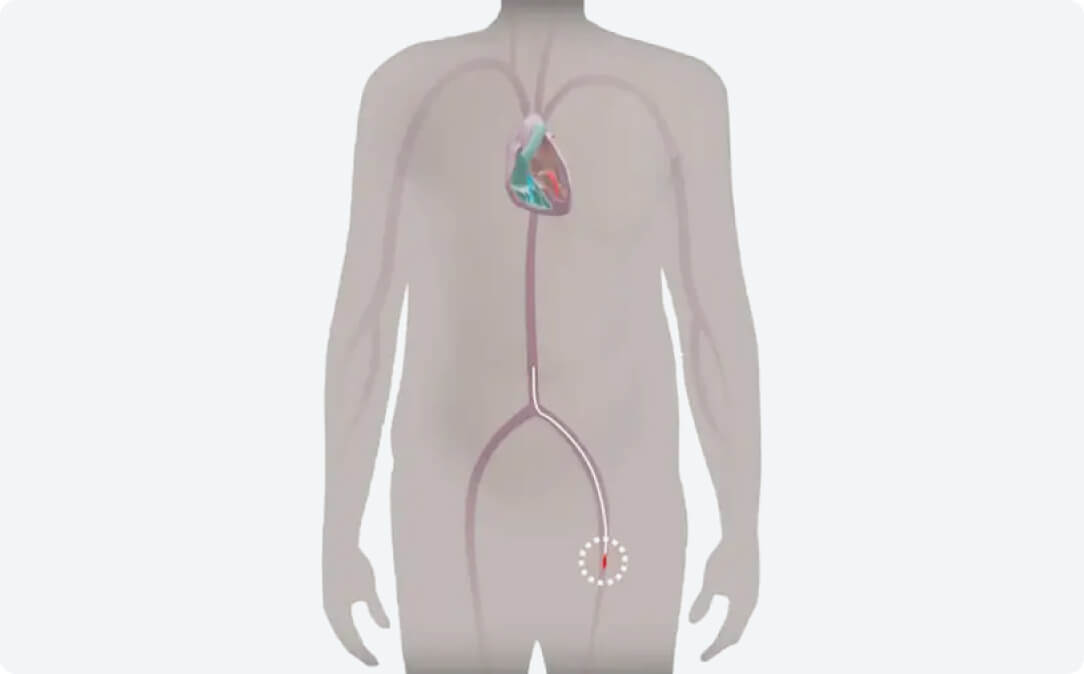
Step 1
A small incision is made in your upper leg. This is where your doctor will insert a short, hollow tube called a sheath into your femory artery.

Find out about TAVI; the minimally invasive treatment option for severe Aortic Stenosis.
Transcatheter aortic valve implantation (TAVI): does not require open heart surgery.
A small incision is made , usually in the groin and a long tube (called a catheter) is guided from the incision site to the heart. A replacement valve is passed through a catheter into the heart, then implanted within the diseased valve.
In NZ, if you have severe aortic stenosis and are experiencing symptoms, you have choices when it comes to which TAVI valve you receive. Understanding which TAVI valve, you are receiving is very important, as not all are the same, and have different benefits.
Learn how the less invasive TAVI procedure is performed.
A routine check up with your GP can often reveal the first sign of valve disease. When a doctor listens to your heart with a stethoscope, they may hear an unusual sound, known as a heart murmur. If a heart murmur is heard you will need an Echocardiogram (Echo) to confirm if you have heart valve disease.
A small incision is made in your upper leg. This is where your doctor will insert a short, hollow tube called a sheath into your femory artery.
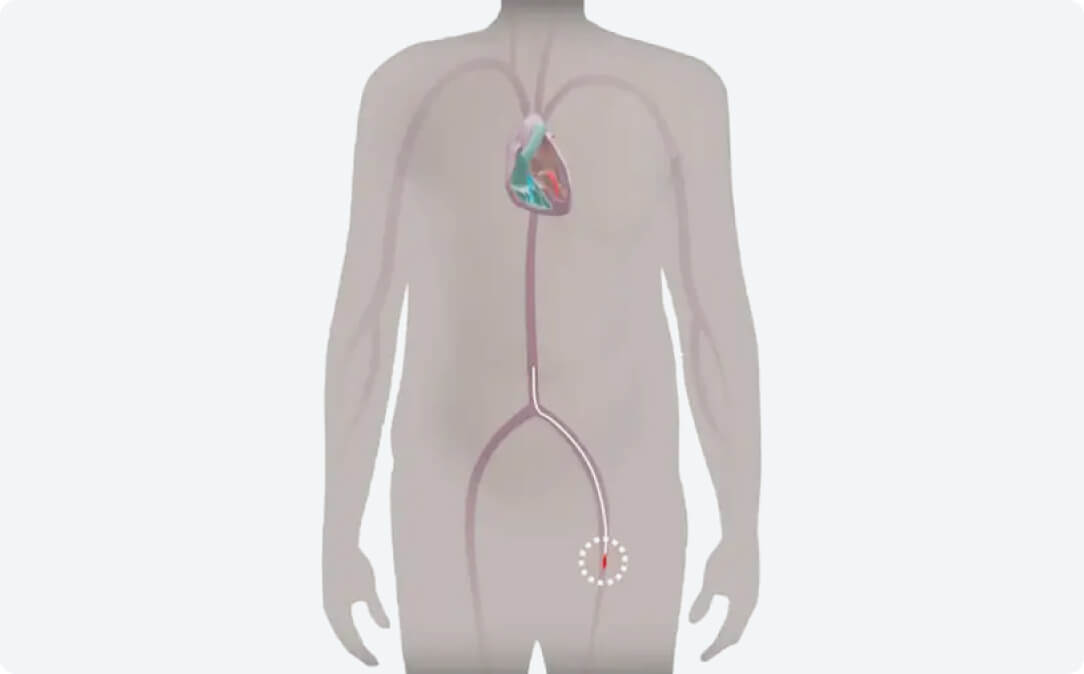
The new valve is then placed on the delivery system (or tube). The new valve is compressed to make it small enough to fit through the sheath.
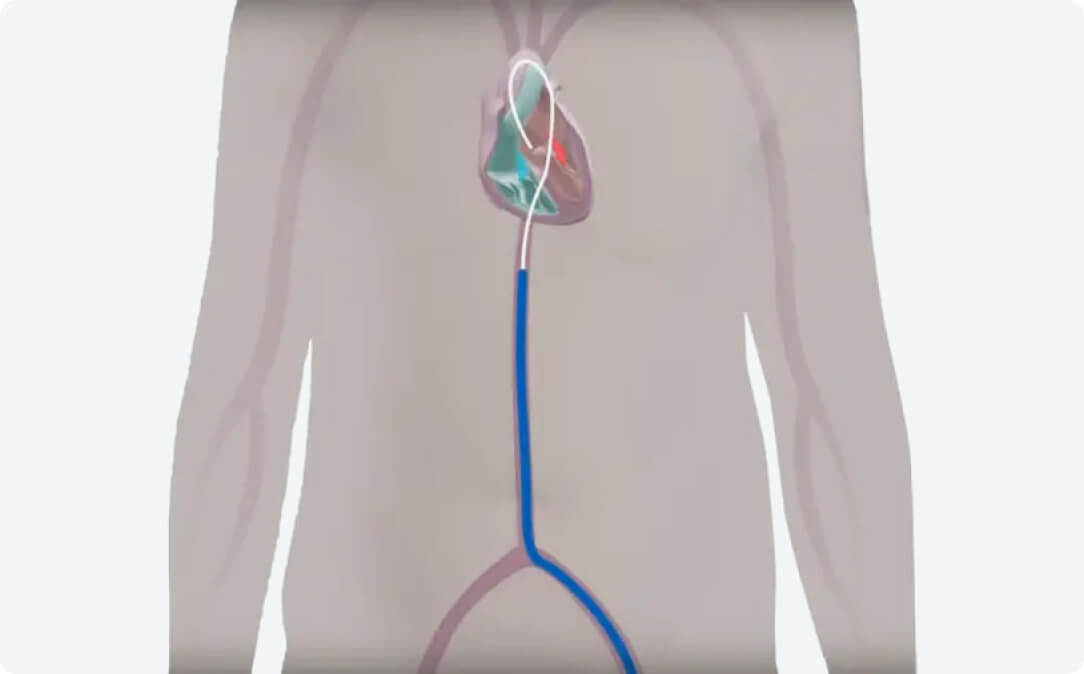
The delivery system carrying the valve is pushed up to your aortic valve. Once it reaches your valve, the new valve pushes aside the leaflets of your diseased valve. Your existing valve holds the new valve in place.
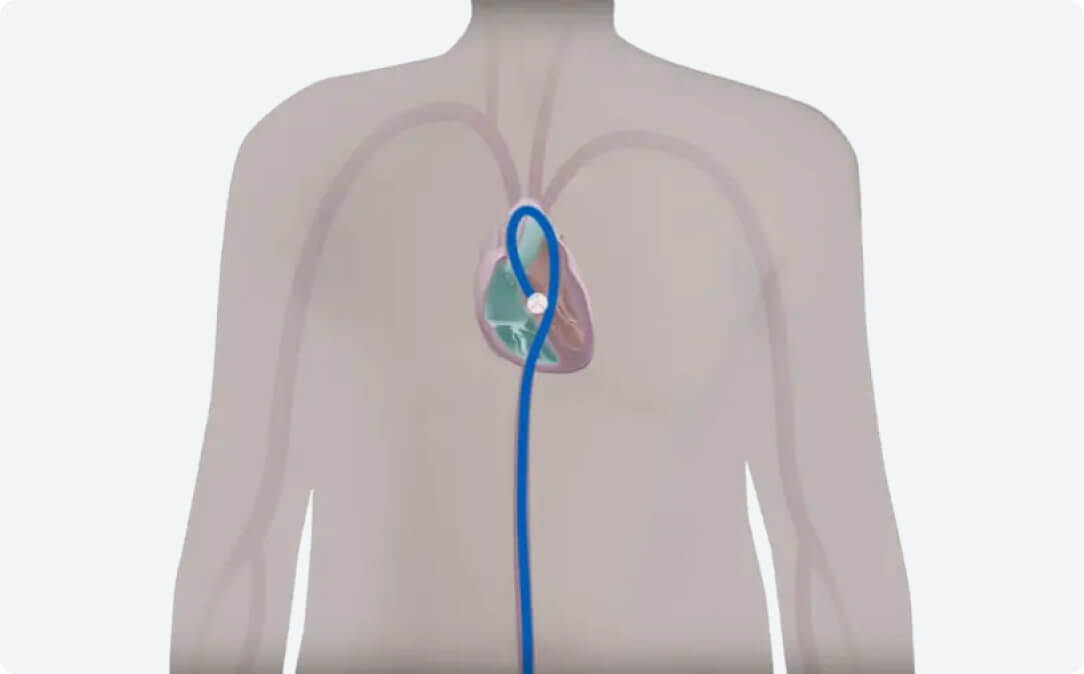
The new valve will open and close as a normal aortic valve should. Your doctor will make sure your new valve is working properly before closing the incision in your leg.
Note: References provided are applicable for all medical claims on this page.
Information on this site includes educational information regarding certain conditions and potential therapies or treatment options. Other therapies or treatment options may be available and you should discuss any educational information you access online with your healthcare professional. Appropriate treatment for individuals is a matter for healthcare professionals to decide in consultation with each individual.