
Rheumatic fever
is the most common cause of mitral valve stenosis.

Mitral Stenosis is a condition where the leaflets become thick or stiff. This results in a narrowed valve opening and reduced blood flow through the valve.
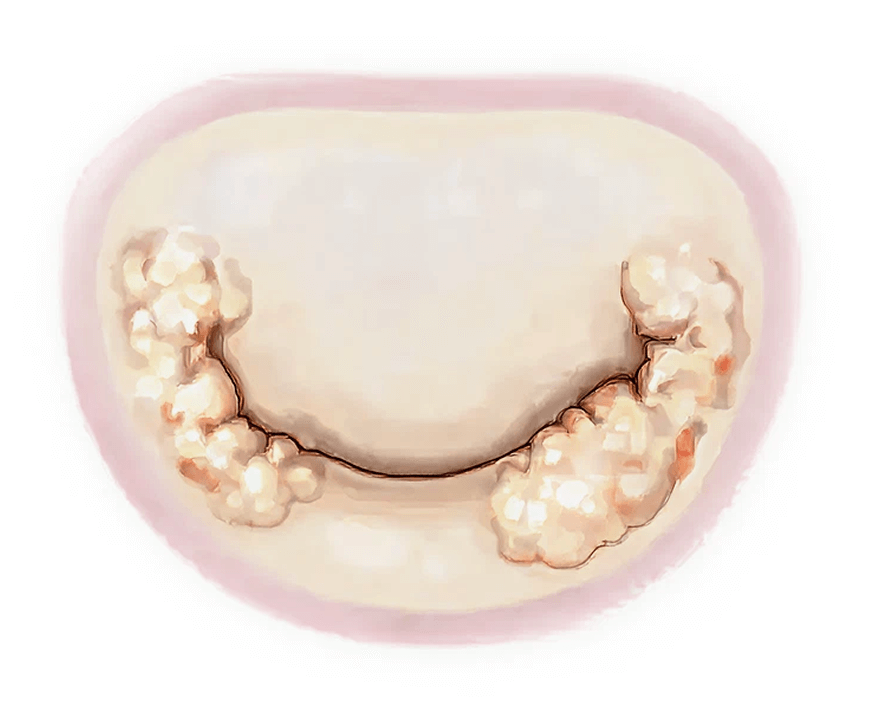
Thickened or stenosed mitral valve
The mitral valve is one of four valves in the heart that keep blood flowing in the right direction. Each valve has flaps — called leaflets — that open and close once during each heartbeat. If a valve doesn't open or close properly, blood flow through the heart to the body can be reduced.
The narrowing of the mitral valve decreases the blood flow to the left ventricle (the hearts main pumping chamber). The heart needs to work harder to compensate for the lack of blood flow. This can make you feel tired, experience shortness of breath and increase your risk of heart failure.
Although medications can't fix a valve defect, they can help with symptoms.
is the most common cause of mitral valve stenosis.

Older adults are at increased risk of calcium build-up around the mitral valve.

Radiation causes changes in the mitral valve shape and structure. Rarely, people who receive radiation therapy to the chest area for certain types of cancer may develop mitral valve stenosis.

Fictional Character
Leave your details below and we will send you more information as it becomes available.
Fictional Character
Note: References provided are applicable for all medical claims on this page.
Information on this site includes educational information regarding certain conditions and potential therapies or treatment options. Other therapies or treatment options may be available and you should discuss any educational information you access online with your healthcare professional. Appropriate treatment for individuals is a matter for healthcare professionals to decide in consultation with each individual.